
Problem
Low-utility sequential pattern mining (LUSP) generates huge numbers of candidate patterns, which makes traditional methods slow on large sequential datasets.
What I built
An optimised implementation of low-utility sequential pattern mining using a prefix-based approach, supervised and reviewed by Dr. Sanjiban S Roy.
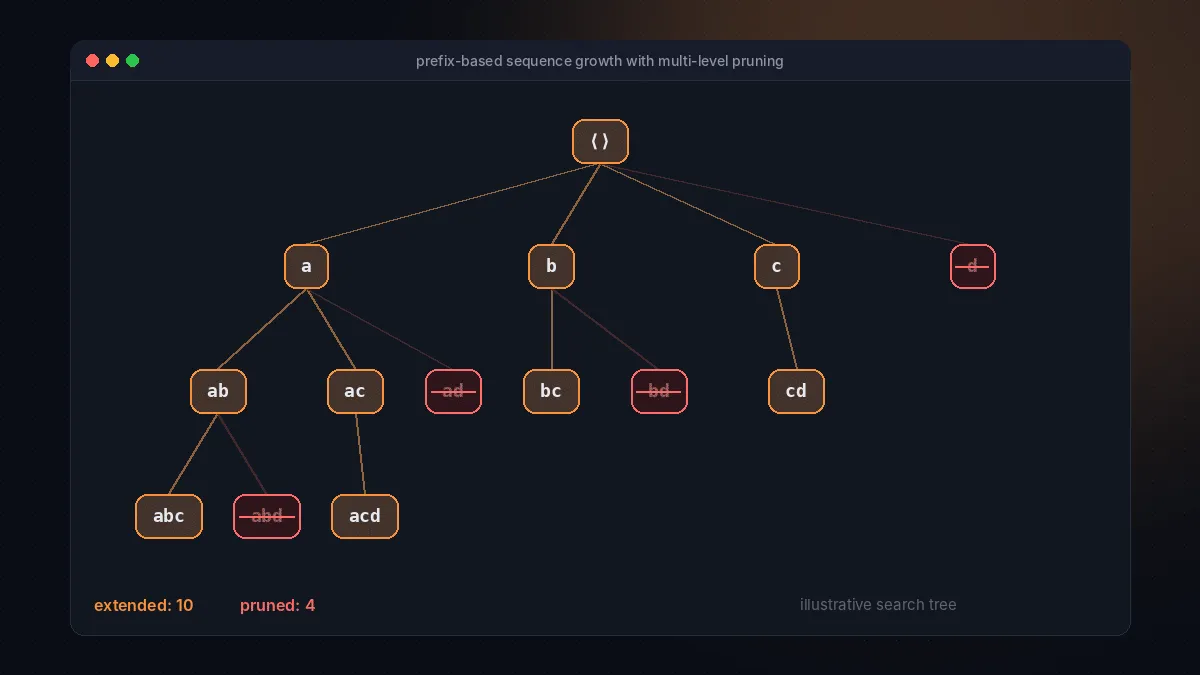
- Prefix-based sequence growth.
- Multi-level pruning and optimised candidate filtering to reduce candidate generation.
- Custom benchmarking scripts for experiments.
Architecture
- Load the sequence database and compute item utilities.
- Grow patterns from prefixes — each candidate extends an existing prefix one item at a time.
- Prune at several levels so branches that can’t produce valid low-utility patterns are cut early, instead of being generated and discarded later.
- Filter candidates and output the low-utility sequential patterns.
- Benchmark runs with custom scripts to compare performance.
Tech stack
- Language: Python
- Data: NumPy, pandas
- Methods: prefix-based sequence mining, multi-level pruning, custom benchmarking